
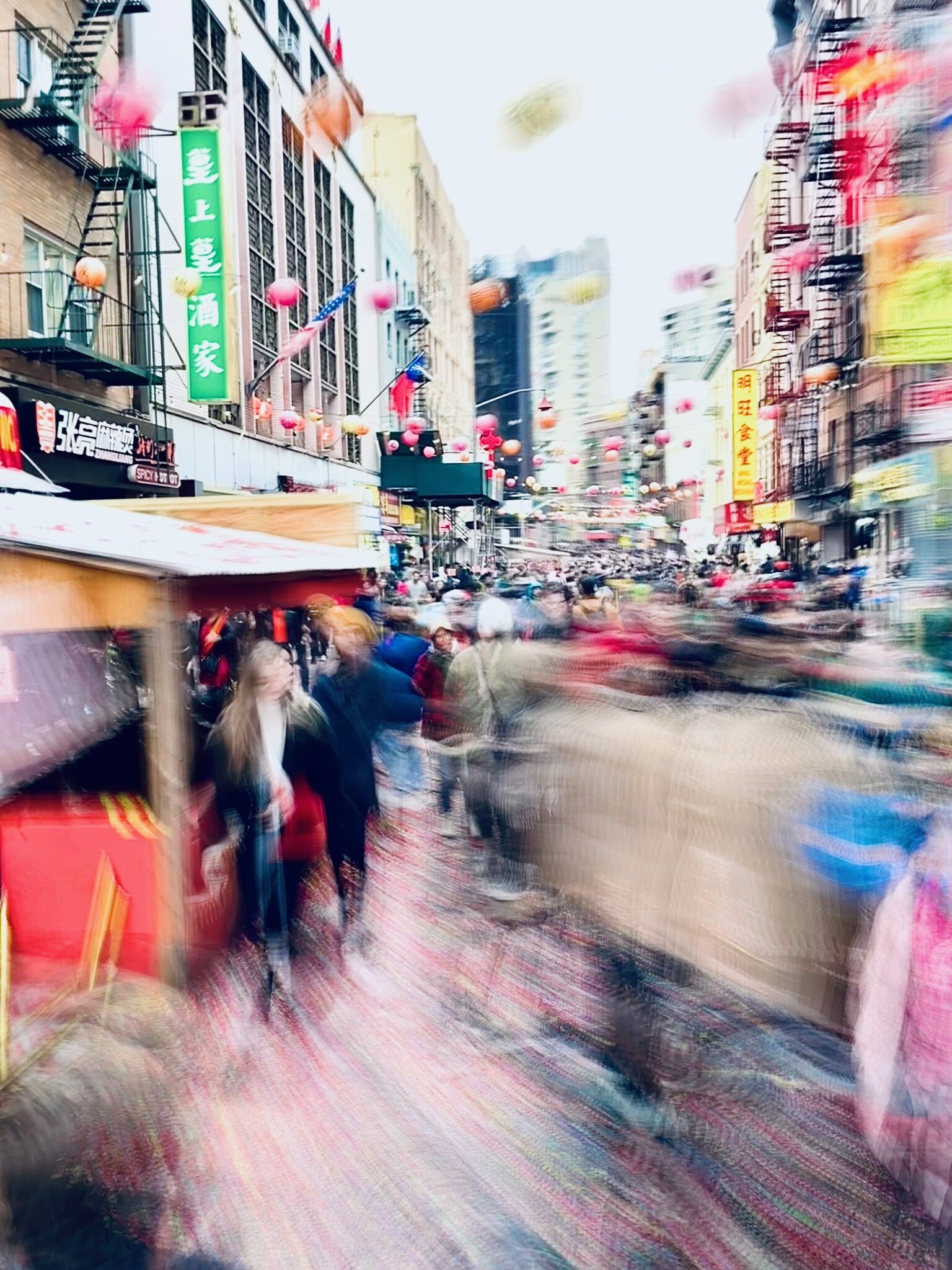
Most of the time, photography leans hard toward perfection.
I like a picture-perfect image too, but I am also interested in how images make us feel.
ICM photography is where I abandon all typical photography “rules.” I let motion inside the frame on purpose. Instead of freezing a scene, I move with it.
The result is not a mistake, but rather intentional camera movement that turns familiar places into something more open, more emotional, and sometimes even more honest.
What ICM Photography Is
At its core, ICM photography is simple. You move the camera while the shutter is open. That’s it.
A slow pan across a beach scene.
A gentle vertical pull through a forest.
A tiny tilt that follows the breeze through a crowd.
Instead of freezing time, you’re layering it—smudging a single second into something softer, more expressive. The result isn’t sharp, but it moves. The keyword here is intentional.
This isn’t a blurry accident. It’s a decision. A creative choice. You’re not trying to capture what the eye sees—you’re chasing what the moment feels like.
You don’t need fancy gear to start. You need a slower shutter speed, a bit of light, and a sense of motion.
Your phone can do it. A basic mirrorless camera can do it.
What matters is how you move and why. Most of the time, the motion is subtle. But I’ve learned to recognize that feeling, that quiet sense that an image is hiding just below the surface, waiting for the camera to move enough to let it out.
Photography Philosophy: Not Just Technique – A Way of Seeing
We like to believe photos are real. But they’re not. They’re interpretations. Slices. Edits. Chosen moments.
Even our own brains are constantly filling in the blanks—constructing what we think we see from fragments. That’s not a flaw. That’s how we make sense of the world.
ICM leans into that truth. It invites motion into the frame to reveal something deeper: structure, energy, emotion, rhythm—things that might hide behind a sharp, clinical snapshot.
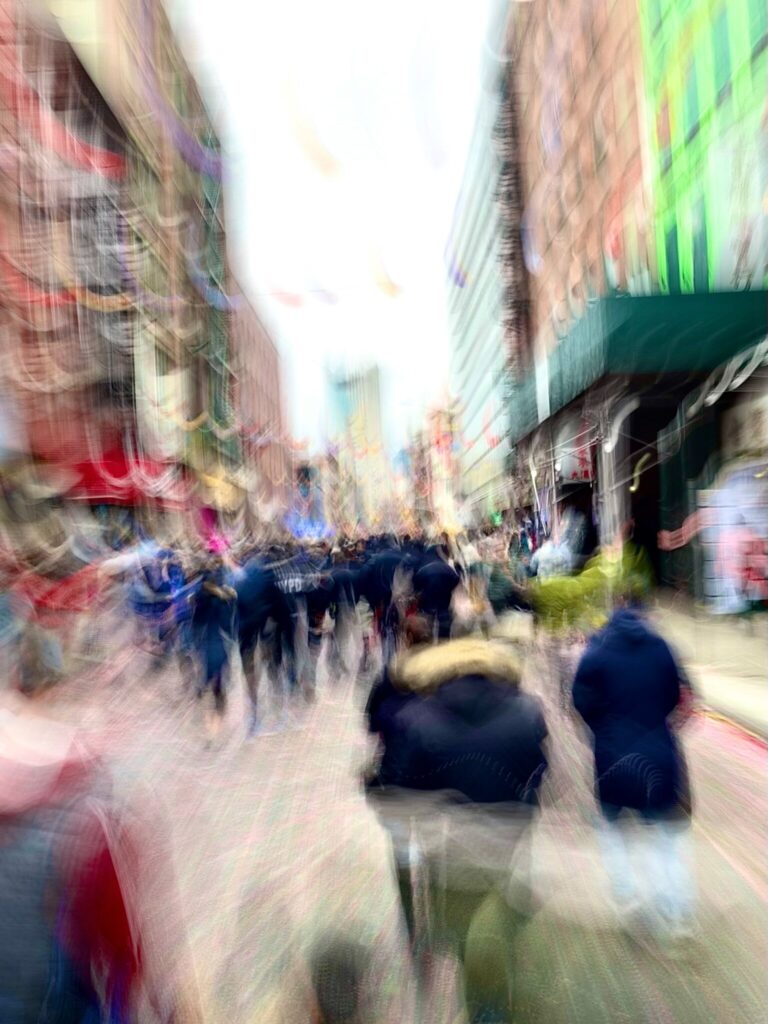
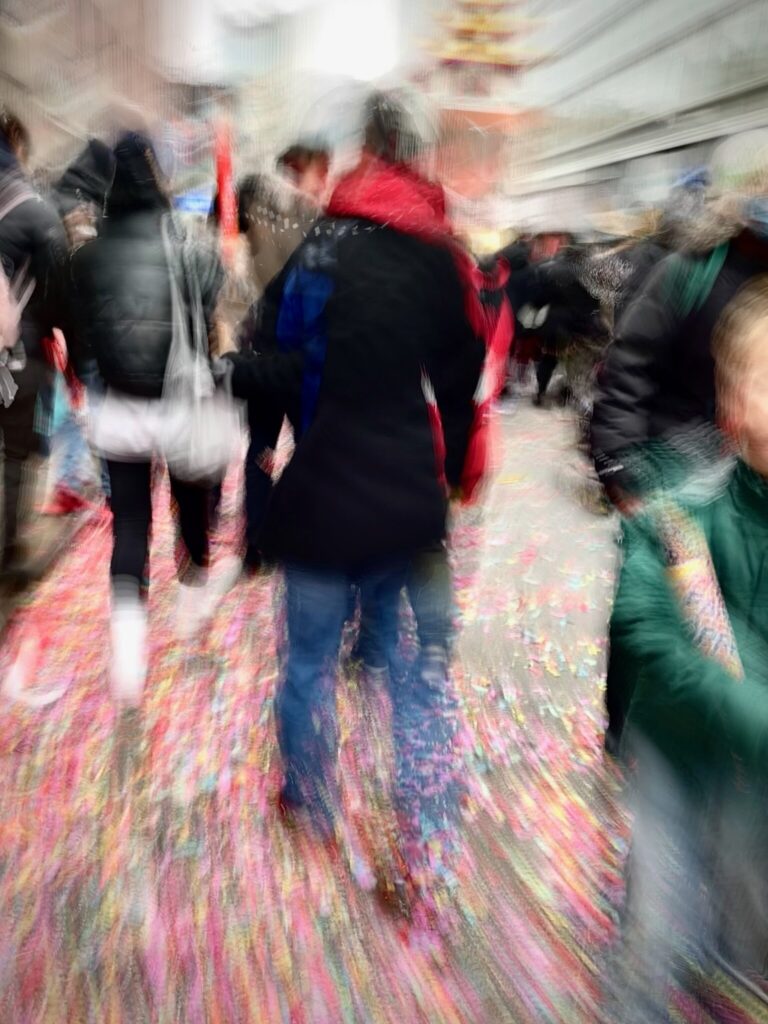
A city street becomes streaks of movement and color.
A quiet shoreline turns into something like breath.
Nothing in the scene has changed, but your attention shifts. And that shift? That’s the magic.
The Emotional Side of ICM Photography
This kind of photography lives in the emotional space. The blur isn’t random—it’s expressive.
A slow sweep can feel calm.
A tight jolt of motion can feel restless or intense.
ICM lets you dial into that mood. I usually let the subject guide the movement. A forest might call for something vertical and slow. A busy street might need a sideways sweep, or a steady hand as I follow someone, turning them into a simple form.
People often tell me my work feels both quiet and full of energy.
That’s the tension I’m always searching for—that mix of stillness and movement, of peace and pulse.
The Conceptual Side of ICM Photography
At first glance, it’s just motion. But conceptually, ICM is about letting go of control—just enough to let something real happen.
There’s a plan: exposure, movement, timing.
But there’s also room for the unexpected:
A stranger steps into frame. A shadow shifts. The wind picks up.
That blend of control and chance is where the good stuff lives. The final image shouldn’t just look interesting—it should say something.
If someone looks at it and feels a memory, or a question, or a flash of something familiar they can’t quite name… that’s when I know it’s working.
That’s the heart of it. Not just photography—but a way of asking: What else is here?
Short Studies in ICM Photography
Sometimes the best way to understand this approach is to see what happens when it clicks—when movement reshapes the familiar.
Let’s explore three scenes that changed once the camera started moving:
Chinatown, NYC
Chinatown is already full of motion—languages, color, history, food, families. It hums with layered energy. You don’t need to invent it. You just need to respond. And my good fortune was landing here unexpectedly on Lunar New Year.
I primarily followed the energy and motion of the crowd. Instead of the literal scenes, I got something that feels closer to memory.
Maybe it’s the soft trails of confetti floating through the air. Or the response of the crowds to the energy and noise.
What comes out isn’t “correct”—but it’s real, in its own way.
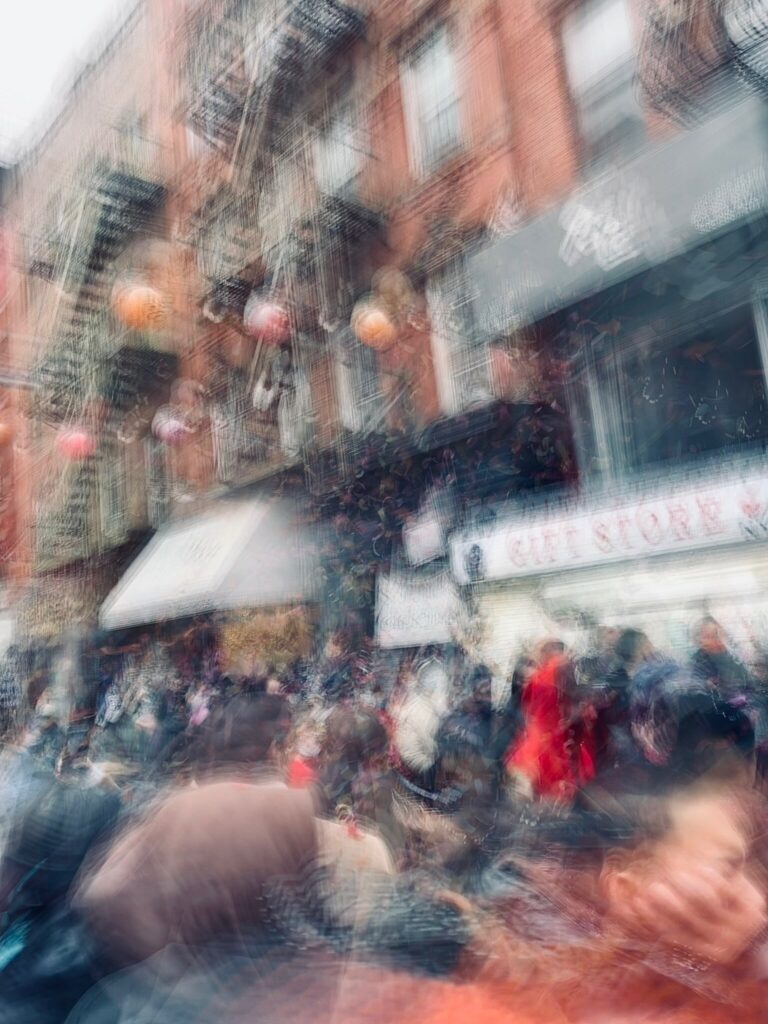
I’ve returned to this neighborhood a few times, but nothing compares to this day. Different light. Different rhythm. Different hand movement. All driven by celebration, captured using the magic of Intentional Camera Movement.
Shoreline
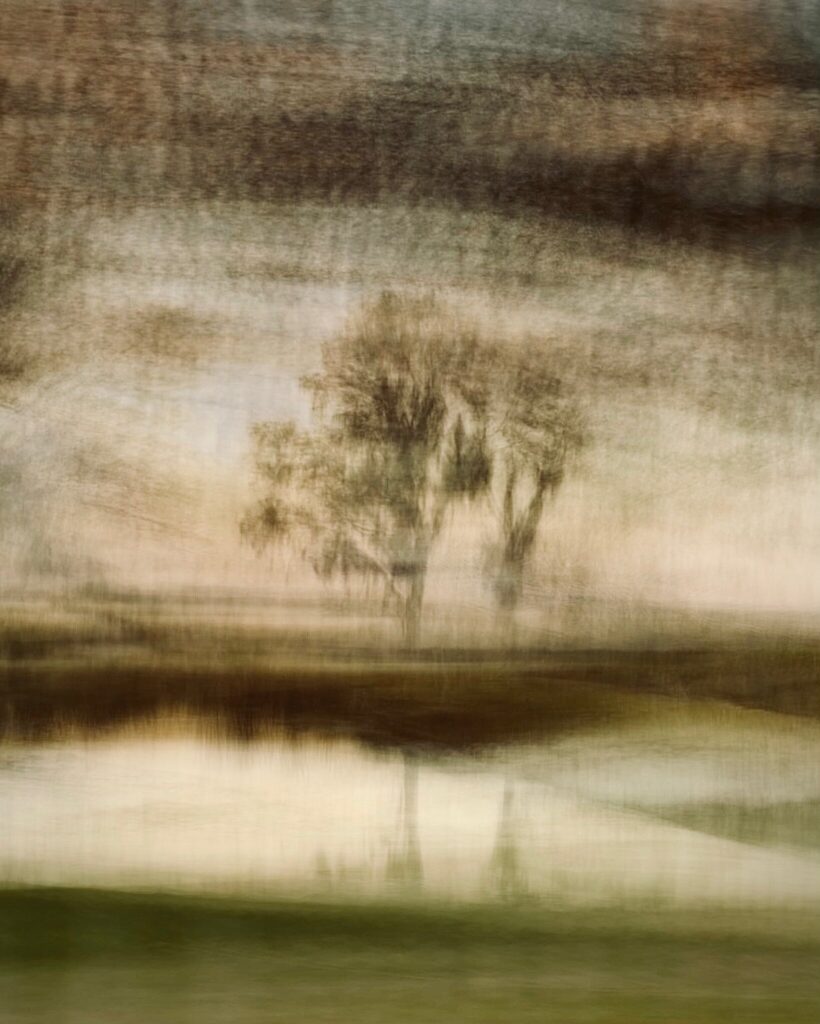
Stillness and motion meet at the water’s edge.
It’s where time slows down and the world feels just a little more spacious.
In my shoreline work, I generally walk toward the surf, allowing hard lines to blur. Or if trees are present, I’ll often rotate the camera, focusing on a central subject as I pass by. The result feels like breathing—long, slow, grounded.
People tell me these images feel meditative. I think that’s because the movement gives your eyes somewhere to go. It’s familiar, but open-ended. It doesn’t push. It invites.
Arboreal

Trees don’t move quickly. But they do move.
Leaves shift. Light filters. Shadows stretch.
In my Arboreal series, I use vertical motion to echo the way trees reach upward, or the rotating motion described above.
The goal isn’t to “capture” a forest—it’s to honor its shape, energy, and presence. What comes through are lines that bend and breathe, even as they stay rooted.
Misconceptions about ICM Photography

Intentional Camera Movement photography can raise eyebrows.
Let’s talk about a few myths I’ve heard more than once:
“Isn’t it just blur?”
Nope. Blur is what happens when you miss the shot.
ICM is what happens when you make the shot—on purpose, with motion as part of the message.
“You need a tripod and fancy gear.”
Definitely not. Tripods just get in the way.
You need to be able to flow with a scene or subject. And no high-end gear is needed.
If you can control or slow the shutter speed, you can even do it with your phone. I shoot almost exclusively with an iPhone 12, using Live Mode (more on this in a future post). It’s compact, always with me, and perfect for inconspicuous street shooting.
“It’s not real photography.”
All photography is interpretation.
Whether you’re chasing golden hour in the mountains or dragging color through a city street, you’re making choices.
If those choices connect with someone, then it’s real. That’s the only rule that matters.
Getting started with Intentional Camera Movement?
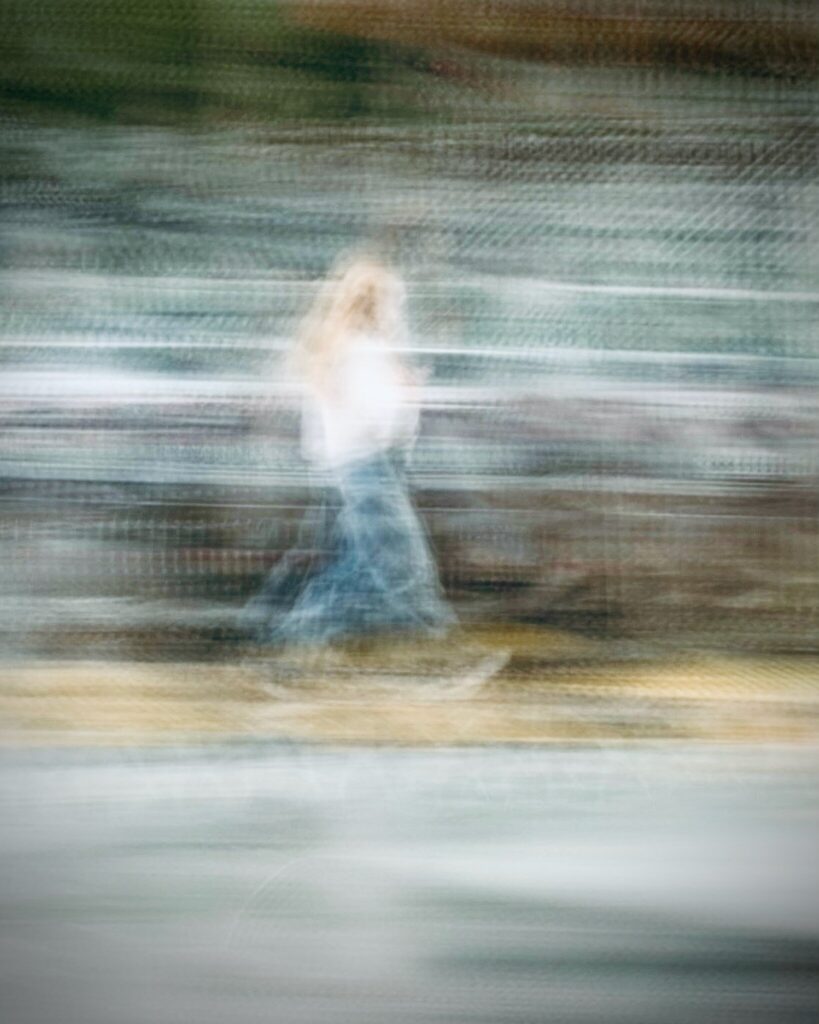
Curious to try it for yourself? Here’s how to begin—no pressure, no perfection required.
Here are a few tips for getting started:
- Slow your shutter. Start around 1/4 to 1/2 second. It gives the sensor time to “feel” the motion.
- Move with purpose. Pan, pull, tilt, rotate—follow the energy of your subject.
- Look for structure. Lines, edges, layers—trees, sidewalks, reflections. These guide the motion.
- Don’t over-edit. Some shots will land. Others won’t. That’s part of it. You’re not fixing—you’re revealing the feeling that was already there.
- Print something. There’s something about holding the work in your hands. It slows you down. It makes the image real.
ICM isn’t about chasing a perfect result.
It’s about paying attention to motion, to emotion, to what the world is already doing.
A final look at Intentional Camera Movement

The longer I spend with this process, the more I see it as a kind of question: What else is here that we don’t usually notice?
A moment is never just one thing. It’s movement, mood, light, sound, memory.
ICM makes space for that complexity. It removes the “what” and lets you explore the “how.”
So if this speaks to you, if you’re tired of chasing sharpness and ready to explore something more intuitive, maybe give it a shot.
Spend some time exploring the galleries.
Each print is made to order and available in a range of sizes and paper types. If something catches your eye, or if you just want to talk shop, reach out. I’d love to hear from you.
Until then, keep moving.
“If you’re out there shooting, things will happen for you. If you’re not out there, you’ll only hear about it.” – Jay Maisel

